What Is Intentional Dating? A Practical Guide
Deciding what you want from dating, saying it out loud, and matching your actions to it. What intentional dating is and how to practice it.
On this page
What Is Intentional Dating? A Practical Guide
The phrase gets thrown around a lot now, usually next to words like “slow” and “mindful”, and usually without a definition. So here’s mine. Intentional dating is deciding what you actually want from dating, saying it out loud, and choosing your actions to match. It’s the difference between dating on purpose and dating by default.
That definition is doing less work than it sounds like. Most dating advice tries to change your tactics: send better openers, wait the right number of days, play the game more skilfully. Intentional dating questions the game itself. It asks whether the person you’re messaging fits what you want, and whether how you’re dating serves what you want, before it asks anything about technique.
Why the default mode stopped working
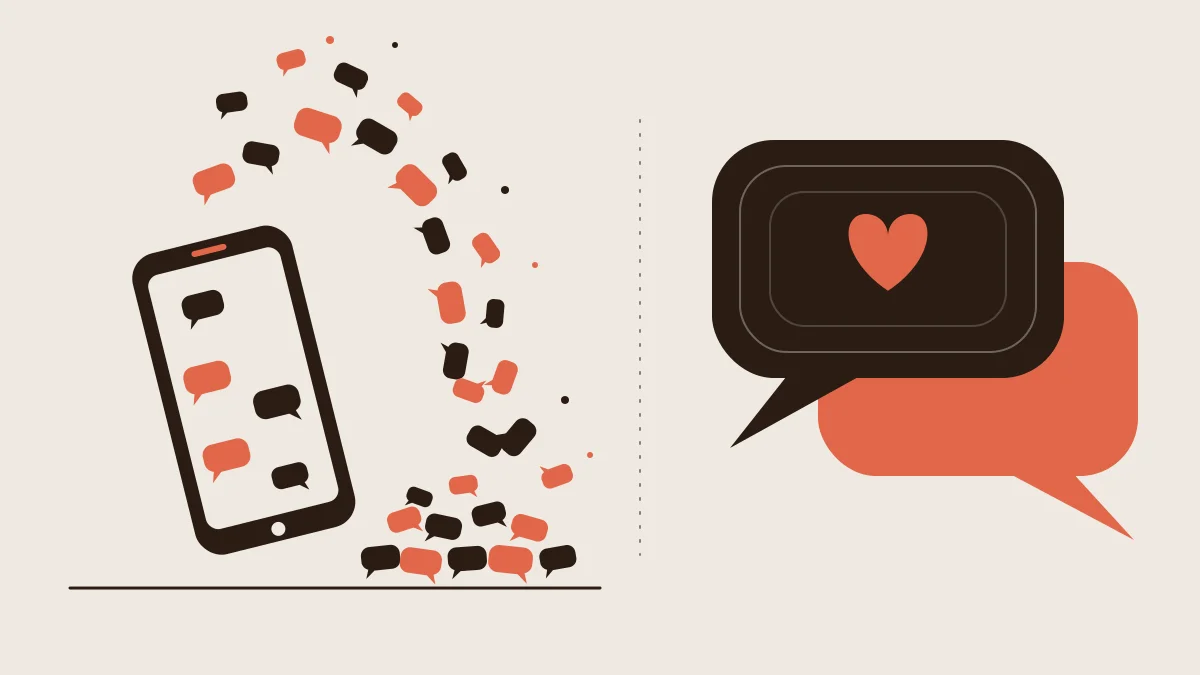
The default mode of modern dating is volume. Keep swiping, keep several chats warm, keep options open. It feels productive. The research on choice suggests it mostly isn’t. Barry Schwartz spent a career documenting the paradox of choice, where more options reliably make decisions worse and satisfaction lower. Dating under volume conditions is a textbook case: you split your attention across five conversations, give each a fifth of your energy, and end the week more tired and no closer to anyone.
There’s also good evidence that the underlying skill of intentional dating, which is really just paying attention to what’s happening, does measurable good in relationships. Sean Barnes and colleagues found people higher in trait mindfulness reported higher relationship satisfaction and handled conflict more constructively. Gesa Kappen’s team traced part of that link through partner acceptance, the willingness to see someone as they are rather than as you’d like them to be. A 2025 pooled analysis of the randomised trials found mindfulness training had a small but consistent effect on how satisfied couples were.
Read that stack together and it’s not mystical. Attention is the active ingredient. Intentional dating is just attention, aimed.
How to practice it
I don’t claim to run my dating life like a monk. These are the four practices I actually think matter, in the order I’d adopt them.
Decide what you want before you look for it. Not “someone great”, which is a horoscope. The specific shape: what kind of relationship, at what pace, with what dealbreakers. Write it down if writing things down embarrasses you less than drifting does. The point of the exercise is that a target you’ve articulated can be aimed at, and one you haven’t can’t.
Say it early, without a performance. Once you know what you want, you have to let other people know too, because the alternative is letting them guess. Early doesn’t mean the first message. It means early enough that the other person can make an informed decision, rather than finding out four months in that you were reading the same situationship completely differently.
Talk to fewer people at once. This one is counterintuitive in a volume economy, but it’s the whole hinge. Depth and breadth trade off; you cannot give a connection a real chance while keeping four alternatives warm. Pick the conversations that genuinely interest you and give them your actual attention.
Be where you are. On a date, be on the date. Barnes found state mindfulness, attention to the present moment, related to better communication quality even within a single conversation. You don’t need to meditate about it. You need to put your phone in your pocket and ask a second follow-up question.

What intentional dating is not
It isn’t a rulebook. There are people selling intentionality as a protocol: no texting before the third date, no physical contact before some milestone. Rules like those are just volume dating with the dial turned down, because the intention is still coming from outside you.
It’s also not an accusation. If you’ve been drifting through dating without a plan, you’re in the majority, and the design of the products you’ve been using makes drifting the path of least resistance. Their business model rewards the time you spend inside them. Nothing about that is a character flaw on your part. It does mean the change starts with you rather than with an app update.
Where I’d start
If the volume mode is what you’re trying to leave, the fastest lever is changing where you meet people rather than how you talk to them. Meeting through friends makes intention easier to practice, because a mutual connection carries the information volume dating spends weeks faking: that you’re real, that you’re decent, that this is worth both of you showing up properly.
That’s the dating WYDM was built for. Your card moves through your actual social circle, people vouch for it, and nobody needs a hundred matches to find one good date. If you want to date like you mean it, build your card and let the people who know you do what they used to do best.