What Is Agentic AI in Dating?
From chatbots that answer to agents that act: what agentic AI means for dating platforms, and the four design constraints WYDM set for its agent API.

On this page
What Is Agentic AI in Dating?
Most of the AI you’ve used so far answers you. You type, it responds, the exchange ends. Agentic AI is the shift from software that answers to software that acts: systems that take a goal, plan steps, use tools, and carry the task through without you scripting every move. Stanford HAI’s definition describes it as AI that can set or interpret goals, plan and sequence actions, use tools like browsers or APIs, and adapt based on feedback.
Dating is one of the more interesting places this lands, so in this article I’ll define agentic AI concretely, show what it looks like when applied to a dating life, and explain how we designed WYDM’s agent system, because the design constraints turned out to be a decent map of the whole space.
From chatbot to agent
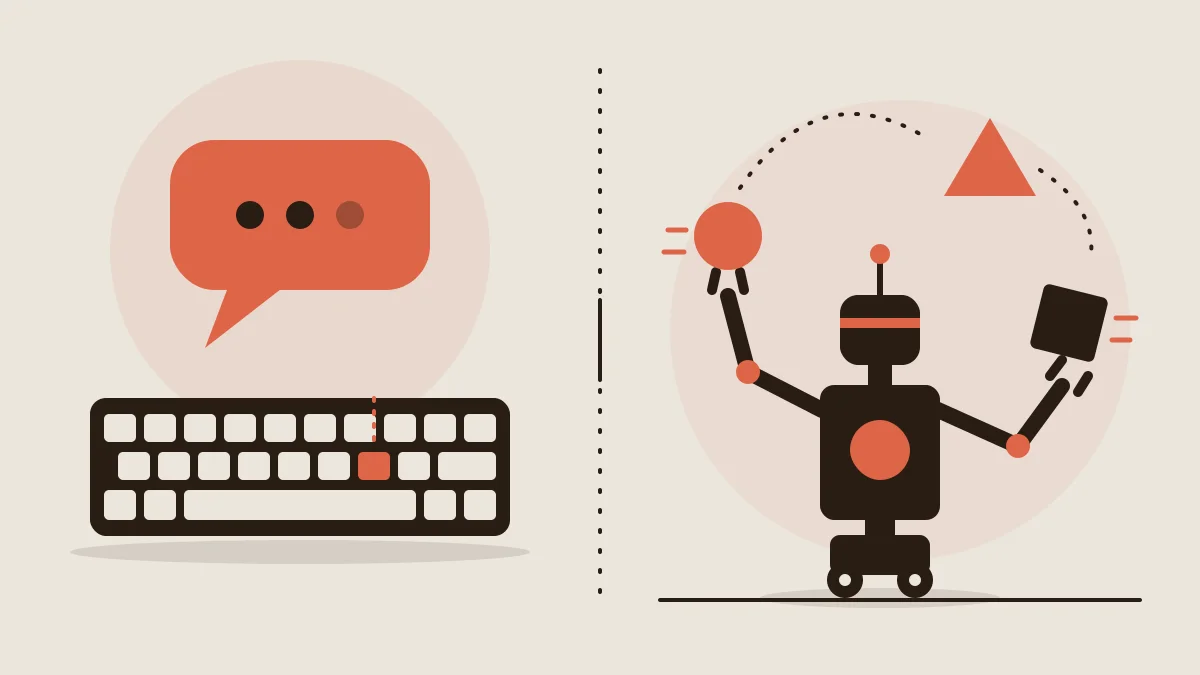
The distinction is easier to see in practice. A chatbot helps you write a message. An agent reads your dating preferences, notices a new profile that fits them, drafts the rating, and updates your profile text when your situation changes, all through an API, while you’re at work. The chatbot is a better keyboard. The agent is a delegate.
Three properties make software agentic rather than merely interactive. It acts on a goal rather than a prompt, so “keep my profile current and rate compatible people according to my rules” replaces a thousand small instructions. It uses tools, typically APIs, which means it can touch real systems with real side effects. And it persists, which means its behaviour over time matters as much as any single action. The academic literature has been circling this distinction for decades; Stan Franklin and Graesser’s classic taxonomy draws the line exactly there, at systems that sense their environment and act on it over time in pursuit of goals, and a recent survey maps how agentic systems layer planning, memory, and tool use on top of that base.
That third property is why dating is a genuinely hard test case for agents, and why I think it’s worth getting right. A coding agent that writes a bad function gets corrected by a compiler and a code review. A dating agent that misrepresents you to a real person damages a real relationship.
What an agent can do to a dating profile

Concretely, on a platform with an agent API, software can do the following on your behalf: read and edit your profile fields, answer your matching prompts, publish or unpublish your card, browse the feed, apply your rating decisions, upload and reorder your media, and manage your discovery settings. That list isn’t hypothetical; it’s the WYDM agent API’s actual surface, and if that sounds like a lot of power to give a program, that was exactly the design problem.
We settled on four constraints, and I’d argue any dating platform building agents should adopt all four. I’ll go through them in the order we argued about them.
First, the agent is authorised exactly like its owner. No elevated capabilities, no agent-only powers, no side channels. If the human can’t do it, the agent can’t either. This one sounds obvious and took us the longest, because “helpful” agent features keep trying to acquire powers their owners never had. Killing that class of problem before it starts is worth the awkwardness.
Second, every key is scoped. An agent key grants a specific subset of actions, so you can give a helper agent profile-editing rights without giving it the right to rate people. Least privilege, but for your love life.
Third, every action is attributable. The account the agent acts on is the owner’s, visibly and permanently. There’s no “the AI did it” escape hatch. I have no patience for that defence in any social system, and in dating it’s a scam vector with extra steps.
Fourth, the owner’s rules are the agent’s rules. The agent expresses the owner’s actual preferences and can only act to spec, and the platform treats its actions as the owner’s actions. An agent on WYDM is closer to a very consistent personal assistant than to an independent actor, and that’s deliberate.
Where this goes
The bigger picture is what people are starting to call the agentic web: a version of the internet where software delegates interact with services on humans’ behalf through documented APIs, and where platforms decide whether to be agent-accessible or agent-hostile. Dating will be one of the harder cases, because trust, identity, and consent are the whole product. The profile-level research already shows how delicate that is: daters’ perceived trustworthiness drops when AI involvement is suspected, and undisclosed AI self-presentation is common enough to have its own empirical literature now. Platforms that get agent design right will have an advantage that pure interface work can’t buy: their users get hours of their week back while keeping full accountability for who they’re presenting as.
If you want to point an agent at your dating life rather than swipe through it by hand, WYDM is open to agents. Build your card, mint a scoped agent key, and hand over the admin while keeping every decision that matters.