AI Matchmakers vs. Dating Apps: What Actually Changes
Bumble just replaced the swipe with an AI matchmaker. What matchmakers do that marketplaces cannot, and where AI matchmaking still has to prove itself.
On this page
AI Matchmakers vs. Dating Apps: What Actually Changes
In May 2026, Bumble announced it was phasing out the swipe in favour of an AI assistant called Bee, which learns your goals and communication style in conversation and recommends matches directly. That’s the company that popularised the swipe, deleting its signature gesture in favour of a matchmaker. I don’t think that’s a gimmick. I think it’s the beginning of the industry admitting the marketplace model is exhausted, and I want to explain what’s actually being traded and what the new model has to get right.
The marketplace model, and why it’s tired
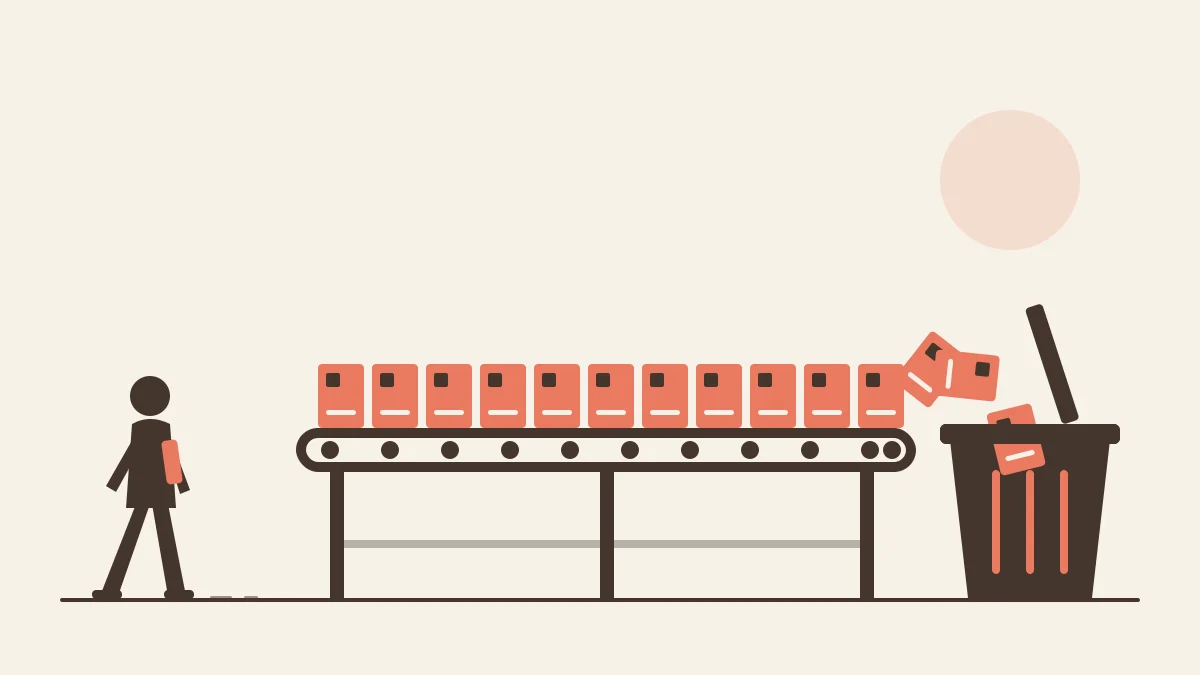
Dating apps as we’ve known them are marketplaces. The product is inventory: a feed of strangers you browse, self-serve, and transact with. That model worked because it solved a real search problem, and Michael Rosenfeld’s long-running research at Stanford documents exactly how well it worked: within about fifteen years, meeting online went from almost nothing to the single biggest way couples meet.
But the model has a maintenance problem, and the numbers have turned ugly. Mobile analytics firm AppsFlyer found that 65% of dating apps downloaded in 2024 were deleted within a month, rising to 69% in 2025. People install, swipe, find nobody worth the effort, and leave. The marketplace’s answer to that has been more inventory and more swiping, which is a bit like treating a hangover with the bottle.
What a matchmaker does that a marketplace doesn’t
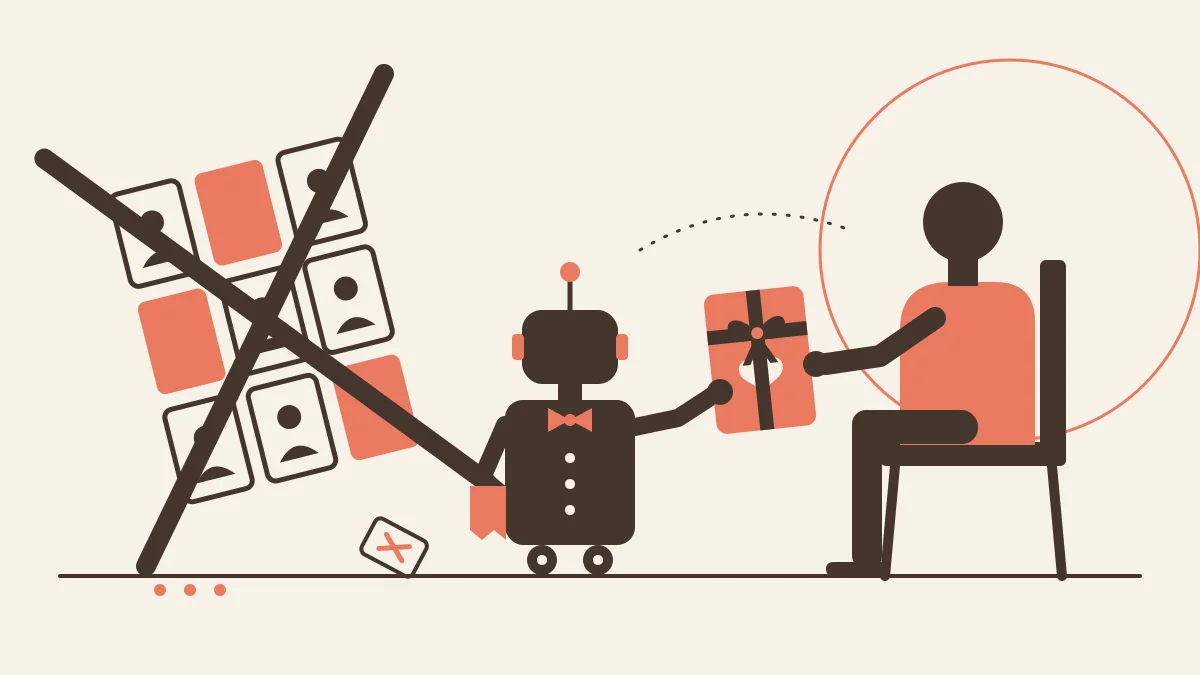
A matchmaker doesn’t show you everyone. A matchmaker shows you somebody, with a reason. Traditional human matchmakers have done this for centuries, and the product they sell isn’t access to a pool. It’s curation plus accountability: a reputation staked on every introduction.
As Bumble’s Bee, Tinder’s AI discovery tools, and Grindr’s AI wingman take over the choosing, they reach for that same shape: fewer options, better-fitted, with a stated reason for each. Whether an AI matchmaker can actually deliver on fit is an open question. It’s the curation-plus-accountability promise I’m watching, because the curation is the easy half.
The accountability half is where pure AI matchmaking gets thin. An algorithm that picks badly carries no cost, has no reputation, and never has to face either party. A human matchmaker who consistently introduces mismatches loses clients. Bee’s recommendations have no such stake, and no Wu et al.-style trust study on AI matchmakers exists yet to tell us how users respond over time, though the early profile-writing research isn’t encouraging about trust in unseen AI involvement.
The version I’d actually bet on
Here’s my bias, declared: I built WYDM, and I built it around introductions rather than inventory. WYDM cards circulate through real social circles, members rate each other with their names attached, and an AI agent can operate your card, scoped to what you’d actually want, so the admin of dating doesn’t eat your evenings. The matchmaker in that design isn’t a black-box algorithm. It’s your social graph, which is the only matchmaking technology with a track record measured in centuries, plus software doing the labour.
I think that hybrid is where this decade of dating lands. Pure marketplaces burn out their users, pure AI matchmakers have an accountability gap, and the historical winner, introduction through people you actually know, turns out to be very augmentable by software that handles the parts humans find awkward: the asking, the maintaining, the following up.
If you want dating where somebody vouches for you and something handles the admin, build a card on WYDM. The introductions are yours. The labour is your agent’s.